


Views: 0 Author: Site Editor Publish Time: 2026-07-31 Origin: Site


Capital expenditure in meat processing always carries significant financial risks. If you undersize your machinery, you will immediately face production bottlenecks and overworked motors. Conversely, oversizing results in wasted capital, extended idle time, and highly inefficient cleaning cycles. Choosing the right meat-bone separator involves much more than simply matching a stated hourly throughput. You must seamlessly align the machine capacity with specific raw material profiles, downstream line speeds, and future facility scalability. Misjudging these critical factors often leads to compromised product quality. We created a structured evaluation framework to solve this exact problem. Plant managers and technical buyers can use it to pinpoint their exact capacity and technical requirements. By understanding these parameters, you will make highly informed decisions before you ever request a manufacturer quote.
Machine sizing must account for actual operational uptime (excluding cleaning and maintenance), not just nominal maximum throughput.
Material density matters: a dedicated poultry meat-bone separator will have different sizing and pressure requirements compared to a heavy-duty red meat separator.
Scaling up in size often introduces new variables in temperature control and bone residue management that require additional cooling or pre-breaking infrastructure.
Processors often make the mistake of buying equipment based solely on theoretical capacity. They look at a spec sheet, see a high number, and assume it matches their production line. This approach rarely works in real-world processing environments.
You must differentiate between a manufacturer's theoretical maximum capacity and realistic operational yield. A machine rated for 3,000 kg/hr will not automatically process 24,000 kg during an eight-hour shift. True throughput relies heavily on operational variables. You have to factor in loading delays, shift changes, and raw material variations. Operators take breaks. Supply bins require swapping. Routine sanitation checks interrupt the flow. When calculating your required size, base your math on actual processing minutes per shift. Real-world output usually hovers around 75% to 85% of the theoretical maximum.
You must evaluate how the upstream supply chain feeds your separation equipment. Assess the delivery method closely. Does your facility use a continuous conveyor system, or do you rely on batch deliveries via v-mags? A smaller machine running continuously often outperforms a massive machine waiting for batch deliveries. If you buy an oversized unit for a batch system, the machine sits idle. Idle machinery wastes electricity and disrupts the internal pressure required for optimal meat yield. Continuous feeding maintains consistent pressure, leading to better product texture and lower bone fragment counts.
We strongly recommend adding a 15% to 20% capacity buffer to your calculated requirements. Production demands fluctuate wildly. You might experience sudden seasonal volume spikes. Unexpected supply chain surges can dump excess raw materials onto your processing floor. A built-in buffer allows you to handle these surges without overworking the motor. Pushing a machine beyond its limits frequently voids warranties. It also accelerates wear on critical components like screens and augers. A smart buffer protects your investment while ensuring steady output.
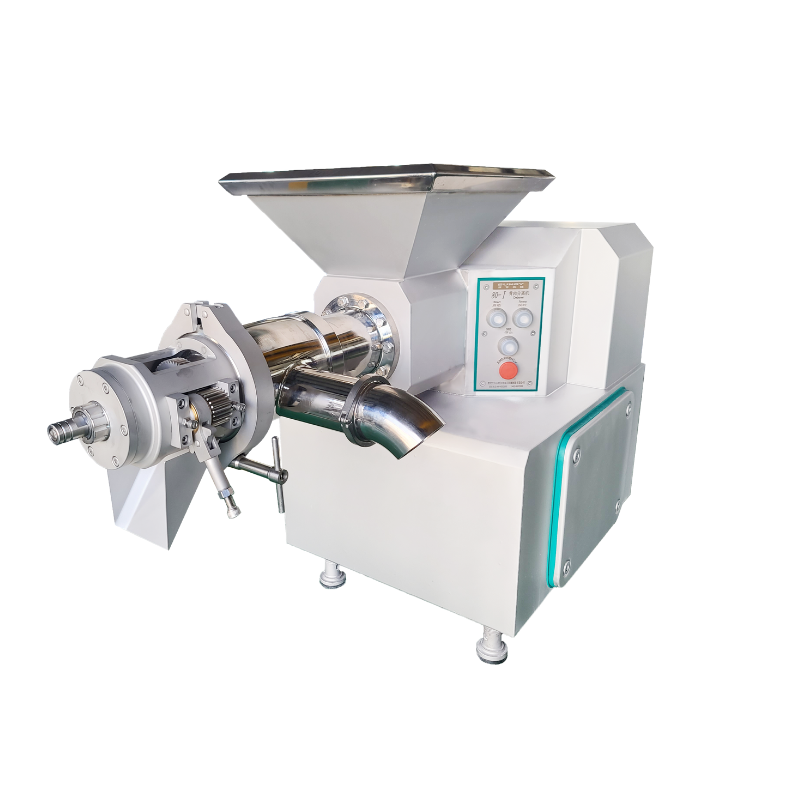
Raw material dictates machine selection more than any other variable. You cannot ignore the physical properties of the bones entering the chamber. Different structures require entirely different mechanical approaches.
Density changes everything. Bone structures dictate the required feed chamber size, screen micron ratings, and motor power requirements. Softer bones break down easily under moderate pressure. Hard, brittle bones demand immense mechanical force. If you put dense materials into an undersized chamber, you will stall the motor. If you use the wrong screen size, you risk bone fragments entering the final meat paste.
When selecting a poultry meat-bone separator, focus on processing high-volume, softer structures. Chicken frames, turkey necks, and wishbones fall into this category. These materials generally require less aggressive crushing force. However, you must evaluate how larger capacities handle connective tissue. If a high-capacity poultry machine applies too much friction, it can over-emulsify the meat. This degrades the texture beyond acceptable limits for premium sausage or nugget production. You want a machine capable of moving large volumes quickly while preserving the meat's fiber integrity.
Processing beef and pork requires a completely different approach. A red meat separator focuses on highly dense, brittle bone structures. These machines need heavily reinforced augers and massive motors. Furthermore, you must consider pre-breaking equipment. You cannot feed intact beef femurs or large pork spines directly into most separators. They require an upstream pre-breaker to reduce bone size. Adding a pre-breaker impacts your overall line footprint significantly. You must account for this extra machinery when designing your floor plan and calculating your electrical load.
Scaling up production introduces complex quality challenges. Bigger machines generate more force. More force creates secondary issues you must manage proactively.
Temperature control is critical in meat processing. Larger augers and higher internal pressures generate substantial friction. Friction creates heat. If you size your equipment improperly, you will cause an excessive temperature rise in the final product. Even a three-degree Celsius increase accelerates bacterial growth rapidly. It also causes protein denaturing, which ruins the meat's binding properties. High-capacity machines must move material through the chamber swiftly to minimize residence time. Some processors install cooling jackets around the separation chamber to mitigate this risk.
Regulatory bodies enforce strict calcium limits. Many standard regulations demand less than 0.1% calcium in mechanically separated meat. There is a direct correlation between running a machine at absolute maximum capacity and the risk of exceeding these limits. Pushing a machine too hard forces tiny bone fragments through the screen. Oversizing can also cause problems. If you underfeed a massive machine, the lack of back-pressure allows fragments to slip through irregularly. Consistent feeding at the correct capacity ensures compliance.
Yield percentages usually range from 60% to 80%, depending heavily on the raw material frame. However, you must establish realistic yield expectations based on your feed rate.
Feeding a half-empty large machine severely compromises pressure consistency.
Loss of pressure drops the overall meat yield immediately.
Inconsistent feeding increases the wear on the internal auger flights.
Maintaining a full hopper ensures the screen operates at maximum efficiency.
A machine might look perfect on paper, but it must physically fit inside your facility. Integration planning prevents expensive installation delays.
You must address the physical dimensions of the machine early in the process. Plant managers often forget to account for mandatory sanitation clearance. Your cleaning crews require ample space to safely remove heavy augers and screens. They need room to maneuver carts and washdown equipment. If you install a massive machine in a tight corner, routine sanitation becomes a daily nightmare. Measure your available floor space and add at least three feet of clearance on all operational sides.
Industrial-scale motors demand serious electrical infrastructure. You must outline the specific electrical requirements, including the total kilowatt (kW) draw. High-capacity motors require immense startup torque. Verify if your existing plant infrastructure can handle this sudden power surge. If your local grid or internal panels lack the capacity, you will face tripped breakers and blown fuses. Upgrading electrical panels adds significant costs to your installation project. Consult your facility electrician before signing any purchase orders.
Compare the teardown and cleaning times of compact units versus heavy-duty equipment. Larger machines naturally take longer to clean. You must factor in your facility's current sanitation protocols. Do you use Clean-In-Place (CIP) systems, or do you rely on manual breakdown? Manual breakdown of a 5,000 kg/hr machine might take two workers an entire hour. A smaller machine might take twenty minutes. Multiply that downtime across hundreds of shifts, and the operational impact becomes massive.
Facility Integration Planning Matrix
Machine Size Tier | Average kW Draw | Sanitation Clearance Required | Estimated Teardown Time |
|---|---|---|---|
Compact (Under 1,000 kg/hr) | 15 - 25 kW | 2 - 3 Feet | 20 - 30 Minutes |
Medium (1,000 - 3,000 kg/hr) | 30 - 55 kW | 3 - 4 Feet | 30 - 45 Minutes |
Heavy-Duty (Over 3,000 kg/hr) | 60 - 90+ kW | 4 - 6 Feet | 45 - 60+ Minutes |
Once you define your technical parameters, you must evaluate the financial and operational realities of your shortlist. Smart procurement looks beyond the initial sticker price.
You must compare the initial capital expenditure against long-term operational costs. A cheaper machine might save you money upfront, but it could drain your budget through high energy consumption. Wear parts also play a massive role in operational expenditure. Screens, seals, and augers degrade over time. Ask the manufacturer about the typical lifespan of these components. Calculate how often you will need to replace them based on your planned shift schedule. High-quality wear parts cost more initially but significantly reduce unplanned downtime.
Plant managers constantly debate the merits of equipment scaling. Should you purchase one massive unit for single-line efficiency? Or should you buy two medium-sized units? Purchasing two identical units provides incredible redundancy. If one machine requires unexpected maintenance, you can still operate at 50% capacity. Two units also allow for maintenance rotation. However, one massive unit requires less floor space overall and reduces the number of operators needed. You must weigh redundancy against single-line efficiency based on your risk tolerance.
Analyze your risk tolerance: Can your business survive a 24-hour total shutdown?
Evaluate operator costs: Do you have the labor force to manage multiple machines?
Check parts inventory: Keeping spare parts for two identical machines is highly efficient.
Never buy heavy processing equipment blindly. We advise all buyers to request a comprehensive material trial. Send your specific raw materials to the manufacturer's testing facility. Let them run your actual chicken frames or pork bones through their machines. This pilot test validates their capacity, yield, and temperature claims. It removes the guesswork. You can physically inspect the meat paste for texture and bone fragment levels. A successful pilot test guarantees the machine will perform exactly as expected on your processing floor.
Choosing the ideal separation equipment requires balancing current realities with future ambitions. The perfect machine sizes seamlessly bridge your current production demands with realistic three-to-five-year growth projections. You can achieve high throughput without compromising product integrity, but only through careful calculation. Avoid the trap of focusing solely on theoretical maximums. Instead, prioritize actual operational uptime, material density, and long-term utility requirements.
We encourage all facility managers to begin with a strict internal audit. Document your current weekly tonnage and identify the specific physical traits of your raw material inputs. Once you have this data, consult with an experienced equipment engineer. Ask them to draft customized layout designs and yield calculations. Taking these analytical steps ensures your next major capital investment drives sustainable profitability for years to come.
A: Technically yes, but it is rarely efficient. You have to completely change the screens, adjust the pressure valves, and alter the feed rates. Switching between soft poultry bones and dense red meat bones takes significant time. High-volume plants usually prefer dedicated machines. This prevents cross-contamination and eliminates the constant need for mechanical recalibration.
A: You can use a very basic formula. Take your Weekly Target Tonnage and divide it by (Shifts per week × Actual processing hours per shift). Once you have that number, add a 20% capacity buffer. This buffer accounts for unexpected volume spikes and normal daily sanitation downtime.
A: No. Yield is determined entirely by pressure settings, screen size, and raw material quality. It is not dictated by the physical size of the machine. In fact, oversizing can reduce your yield. If a large machine isn't consistently fed, the internal pressure drops, leaving valuable meat attached to the waste bone.


