


Views: 0 Author: Site Editor Publish Time: 2026-07-21 Origin: Site


Moving your facility from manual lines to automated processing introduces high upfront planning but drastically reduces repetitive strain injuries and labor bottlenecks. This shift represents a major operational upgrade. However, selecting the wrong equipment creates severe business problems. An incompatible machine leads to compromised meat quality. You might see unacceptable calcium levels or dangerous bone fragments. Furthermore, the wrong choice causes bottlenecks in daily throughput or excessive downtime for complex cleaning procedures. This article aims to solve these common challenges. We provide a strict, vendor-neutral evaluation framework. You will learn how to align machine specifications perfectly with your specific plant capacities and raw input variables. We guide you through assessing yield metrics, safety standards, and operational footprints. Ultimately, you will gain the knowledge needed to make a confident, data-backed purchasing decision.
Throughput must align with line speed: Overestimating capacity leads to inefficient footprint usage, while underestimating causes bottlenecking and motor burnout.
Input dictates technology: A poultry meat-bone separator designed for whole carcasses operates on fundamentally different physical principles than a chicken deboning machine calibrated for premium breast or thigh fillets.
Yield versus quality tradeoff: Maximum meat extraction often correlates with higher bone paste/calcium content; realistic yield targets must align with end-product specifications.
TCO extends beyond purchase price: Consumable wear parts (screens, belts, blades) and sanitation turnaround times are the true drivers of long-term operational costs.
You must define capacity accurately when evaluating a poultry deboning machine. Manufacturers often advertise the maximum theoretical output. However, sustainable operational throughput matters much more. You should measure this in kilograms per hour or pieces per minute under normal working conditions. Machines rarely run at peak speeds continuously. Shifts change, operators take breaks, and raw material supply fluctuates.
To find your true capacity needs, calculate your average daily input. Add a buffer for seasonal spikes. If you buy an oversized unit, you waste valuable floor space. You also consume excess energy. Conversely, an undersized unit creates a severe production bottleneck. It forces operators to stockpile raw meat, which increases temperature risks and bacterial growth. Overworked motors also fail faster.
Smaller processors need distinct features. You should focus on footprint size, rapid changeover capabilities, and energy efficiency. These systems suit facilities running mixed-batch processing. They also work perfectly for plants transitioning away from purely manual operations. Space often limits smaller facilities. A compact machine integrates easier into existing floor plans.
Agility remains critical for mid-volume lines. Operators might process breasts in the morning and thighs in the afternoon. Therefore, the machine must support fast tooling changes. You cannot afford a two-hour downtime window just to swap out cutting profiles. Look for systems utilizing toolless disassembly. They save significant time during shift changes.
Industrial processors face different challenges. High-volume systems demand continuous-flow integration. You must prioritize automated infeed and outfeed pacing. Manual loading cannot keep up with industrial speeds. Conveyor belts and automated hoppers must feed the equipment steadily. Any gap in the feed rate reduces overall efficiency.
Thermal management also becomes vital during extended runs. High-speed moving parts generate significant friction. This friction heats the meat. You must assess cooling mechanisms carefully. Furthermore, evaluate the risk of catastrophic line failure. Relying on a single massive unit poses risks. If it breaks down, the entire plant stops. Sometimes, running two medium-capacity machines offers better redundancy than one giant unit.
Common Mistake: Buyers often ignore the upstream and downstream bottlenecks. A high-speed deboner offers no value if your packaging line cannot handle the output. You must match speeds across the entire processing floor.
System Tier | Ideal Throughput (Approx.) | Primary Evaluation Focus | Best Application Scenario |
|---|---|---|---|
Small to Mid-Volume | 500 - 2,000 kg/hour | Footprint, quick changeovers, low power draw | Mixed-batch lines, farm-to-table operations |
High-Volume Industrial | 3,000+ kg/hour | Continuous flow, thermal management, automation | Large-scale MSM production, continuous 24/7 processing |
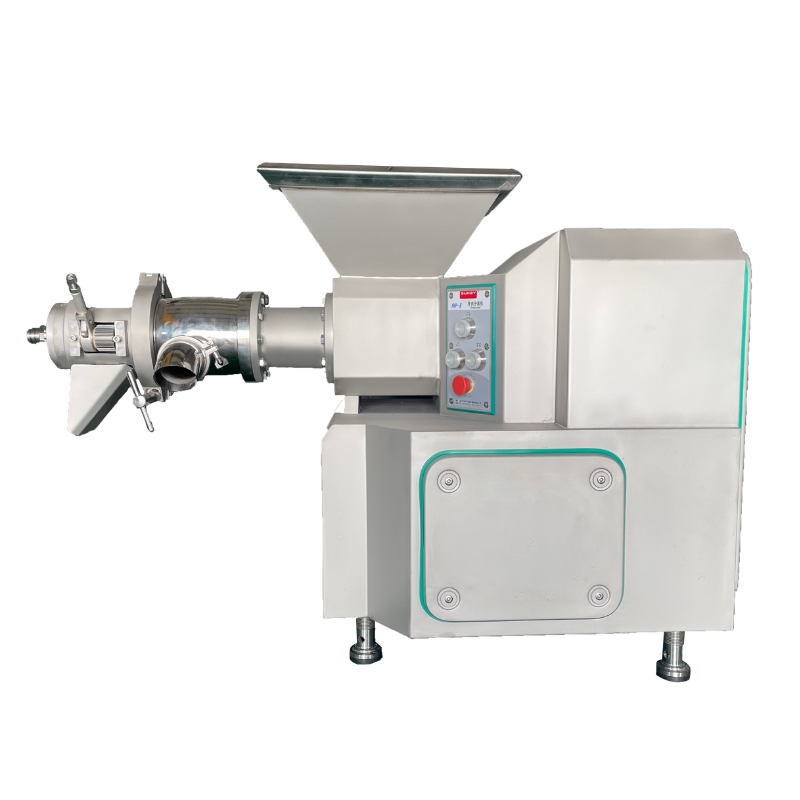
Your raw material heavily dictates your equipment choice. Processors handle vastly different inputs daily. Breasts, thighs, and drumsticks require precise handling. Whole carcasses demand heavy-duty mechanical force. You must align the machine capabilities with your exact raw material.
Premium cuts need careful anatomical positioning. You must evaluate the infeed requirements for any chicken deboning machine targeting whole muscles. Does the equipment require manual pre-cutting? Does it need operators to orient the meat perfectly? Or can the machine handle random infeed orientations? Manual orientation increases labor costs and slows down processing speeds.
Assess whole-muscle preservation capabilities thoroughly. Premium product lines command high retail prices. Retailers reject torn or mangled fillets. The machine must cleanly separate the meat from the bone. It should leave the muscle structure entirely intact. Ask vendors to demonstrate their machinery using your specific cuts. Examine the final product for tears, bruising, and bone fragments.
Whole carcasses introduce different mechanical challenges. Processors often extract meat from frames left over from primary processing. You must understand mechanical limitations when handling varied bone densities. Older laying hens have much harder bones than standard young broilers. A machine calibrated for soft broiler bones might jam or break when processing older birds.
Verify compatibility across varying bird sizes. Flocks always show some size variance. Ask vendors about their acceptable weight and size variance percentages. Some machines handle a 10% variance perfectly. Others suffer significant yield drops if bird sizes fluctuate even slightly. You need flexible equipment to handle biological reality.
Many processors want versatile equipment. They hope to process poultry on Monday and fish on Tuesday. Scrutinize vendor claims regarding cross-compatibility. Switching species often proves more difficult than marketing brochures suggest.
Identify the actual changeover time. Ask exactly which tooling swaps are required. Processing fish requires different screen sizes and pressure settings than poultry. If changing the setup takes four hours and three technicians, true multi-material processing becomes economically unviable. Always request a timed demonstration of a species changeover.
Best Practice: Standardize your input parameters before contacting vendors. Document the exact age, average weight, and cut types you process. Handing this specific data to a vendor ensures they quote the right machine module.
Maximizing yield looks great on a spreadsheet. However, pushing extraction rates too high ruins product quality. You must define the scientific and commercial boundaries of yield extraction. Every processor faces this fundamental tradeoff daily.
When you push a machine to achieve 80% or higher yield, you apply extreme pressure. This pressure frequently degrades the protein structure. The resulting product loses its water-binding capacity. It becomes mushy. It performs poorly in downstream applications like sausage making or forming nuggets. You must balance the desire for maximum meat recovery with the need for functional protein.
Bone fragment management is your biggest quality control challenge. High pressure crushes bones. Micro-fragments slip through separator screens and enter the meat block. You must ensure the extracted meat adheres to strict local regulatory standards. Regulators closely monitor calcium levels in Mechanically Separated Meat (MSM).
If calcium levels exceed legal limits, you cannot sell the product as standard meat. It gets downgraded. Downgraded product severely hurts your profit margins. A reliable poultry meat-bone separator gives you fine control over extraction pressure. This control allows you to keep bone paste and calcium content well within legal compliance levels. Always ask vendors for independent laboratory tests verifying their calcium output claims.
Mechanical friction poses a severe threat to meat quality. As augers and belts compress raw material, they generate heat. Heat degrades meat quickly. It denatures the proteins and encourages rapid bacterial growth. You must evaluate machines based on their thermal management features.
Look for cold-extrusion capabilities. Some machines feature internal cooling mechanisms. They circulate chilled water or glycol through the pressing chamber walls. This cooling jacket absorbs friction heat instantly. It keeps the meat block at a safe temperature. Controlling temperature preserves the functional properties of the meat. It also ensures you meet food safety regulations regarding temperature danger zones.
Common Mistake: Never blindly chase a 2% yield increase if it raises your calcium levels near the legal limit. A single rejected batch costs far more than the extra meat you extracted.
Industrial food processing carries inherent risks. Your equipment must protect both the product and the operators. Modern automated systems offer significant advantages over manual processing, but only if designed correctly.
Manual poultry cutting ranks among the most hazardous industrial jobs. Workers suffer severe repetitive strain injuries. Lacerations occur frequently despite protective gear. You can contrast these OSHA-cited risks with the safety features of automated equipment. Machines remove human hands from the immediate cutting zones. This physical separation prevents countless injuries.
However, automation introduces new mechanical hazards. You must evaluate emergency stop protocols. E-stop buttons must remain highly visible and instantly accessible from multiple angles. Assess the physical guarding around moving parts. Guards should feature safety interlocks. If an operator opens a guard during operation, the machine must shut down immediately. Finally, review infeed ergonomics. Operators shouldn't have to lift heavy totes above their shoulders. Poor infeed design merely transfers ergonomic risks from the cutting table to the loading dock.
Bacterial contamination can destroy a brand overnight. Sanitary design is non-negotiable. Processing raw poultry exposes equipment to high fat and protein loads. These organic soils trap bacteria quickly.
Demand IP69K-rated enclosures for all electrical components. IP69K guarantees the equipment survives daily high-pressure, high-temperature washdowns. Standard IP65 ratings will fail in a modern meat plant environment. Water ingress causes electrical shorts and massive downtime.
Inspect the structural design closely. Follow this numbered list when evaluating hygiene:
Eliminate horizontal surfaces: Flat surfaces collect water and debris. Look for sloped frames that allow liquids to drain naturally.
Check for dead zones: Avoid hidden corners inside the machine where meat paste can accumulate outside the reach of spray nozzles.
Avoid exposed threading: Exposed bolts and threads harbor Listeria and Salmonella. Hygienic machines use covered threads or welded standoffs.
Review continuous welds: Spot welds leave tiny gaps. Demand continuous, polished welds across all product-contact zones.
A machine that takes four hours to clean is a bad investment. Look for Clean-In-Place (CIP) compatibility or systems designed for rapid, tool-free breakdown. Sanitation turnaround times directly impact your available production hours.
A deboning machine is a long-term operational commitment. The initial purchase price represents only a fraction of your financial outlay. The true drivers of operational efficiency reside in routine maintenance, wear parts, and reliable vendor support.
Mechanical separation relies on friction and pressure. This process aggressively degrades internal components. You must separate marketing claims from engineering reality. Ask direct questions about consumables. How often do screens realistically need replacement? How long do cutting blades stay sharp under continuous load? How many hours will a separator belt last before stretching or tearing?
Vendors might claim a screen lasts six months. However, if you process older hens with hard bones, that screen might fail in six weeks. Demand transparent data regarding wear parts. Ask current users of the machine about their real-world replacement schedules. A cheaper machine often utilizes softer metals. These cheaper parts require constant replacement, destroying your maintenance budget over time.
Downtime kills profitability. When a machine breaks, you need it running again immediately. Evaluate the maintenance accessibility of the unit. Can standard plant technicians strip down the machine? Can they perform deep cleaning without specialized proprietary tools?
Some manufacturers design equipment requiring custom wrenches. If you lose that custom tool, you cannot open the machine. This is unacceptable. Look for equipment relying on standard metric or imperial hardware. The design should allow quick access to critical belts and motors. Technicians shouldn't have to remove twenty bolts just to inspect a drive chain. Clear access doors and hinged panels drastically reduce maintenance repair times.
Do not buy a machine based solely on a trade show demonstration. Trade shows use perfectly chilled, ideal raw materials. Your plant does not. You must mandate an on-site or documented factory acceptance test (FAT).
Run this test using your specific raw material. Ship your actual product to their testing facility if necessary. Do not rely on the vendor’s optimized test samples. If you process mixed-size frames, make them test mixed-size frames. Measure the yield, inspect the meat quality, and test the calcium levels from this specific trial. If a vendor refuses a custom material test, remove them from your shortlist immediately. Transparent manufacturers welcome the opportunity to prove their equipment works on your product.
Selecting the best poultry processing equipment requires looking past flashy marketing brochures. The best machine is rarely the one advertising the highest theoretical yield. Instead, the right choice strictly aligns with your facility's daily input variations, floor space constraints, and end-product quality standards. A perfect balance between throughput, bone fragment control, and mechanical reliability guarantees long-term success.
Before contacting vendors, standardize your internal data. Document your exact hourly tonnage needs. Define your acceptable calcium ratios clearly. Map out your floor space and sanitation schedules. Armed with this data, you control the purchasing conversation.
Your next step is simple. Take your internal data and approach three shortlisted manufacturers. Advise buyers to request a custom material testing trial using your specific poultry cuts. Demand a transparent breakdown of consumable costs over a five-year period. Let real-world data, not theoretical promises, drive your final equipment investment.
A: Yields range from 60% to 85% depending on the input (frames vs. whole bird) and technology type, but higher yields require stricter calcium-level monitoring.
A: Whole-muscle deboning usually requires specialized modules or dedicated machines due to bone structure differences, whereas mechanical separators can process varied frames simultaneously.
A: Depending on the abrasiveness of the raw material (hard vs. soft bone) and operational hours, screens and belts typically require replacement every 3 to 6 months in high-volume environments.
A: Mechanical separation crushes bones and extrudes meat paste (used for sausages/nuggets), while whole-muscle deboning uses precise blades or pushing mechanisms to keep fillets intact for premium retail.


