


Views: 0 Author: Site Editor Publish Time: 2026-04-09 Origin: Site


Are you wondering which machine is best suited for your meat processing needs? Whether you’re grinding or mixing, selecting the right equipment can significantly impact your production efficiency. In this article, we will explore the differences between a meat grinder and a meat mixer grinder, and how each fits into industrial meat processing. You’ll learn which machine is ideal for your specific production needs, especially for high-volume processing lines.
A meat grinder is a specialized piece of equipment used to break down large cuts of meat into smaller, uniform pieces. This process is essential in various food production settings, especially in large-scale meat processing factories, slaughterhouses, and commercial kitchens. The core function of a meat grinder involves using an auger, blades, and plates to reduce the size of meat, which can then be further processed or packaged. These machines are designed to efficiently handle a large volume of raw material, making them ideal for high-capacity operations where speed and consistency are critical.
The operation of a meat grinder is fairly straightforward. The meat is fed into a hopper, where it is moved through the machine by the auger. The auger pushes the meat towards a set of rotating blades, which slice and chop the meat into smaller pieces. These pieces then pass through a perforated plate, which determines the final size of the ground meat. Depending on the plate's hole size, the grinder can produce coarse or fine ground meat, suitable for a wide range of products such as sausages, burgers, and minced meat.
The high-capacity design of industrial meat grinders makes them capable of processing large quantities of meat quickly, reducing labor costs and increasing productivity. In commercial and industrial settings, these machines are often built to operate continuously, making them a crucial part of meat processing lines that handle hundreds or thousands of pounds of meat daily.
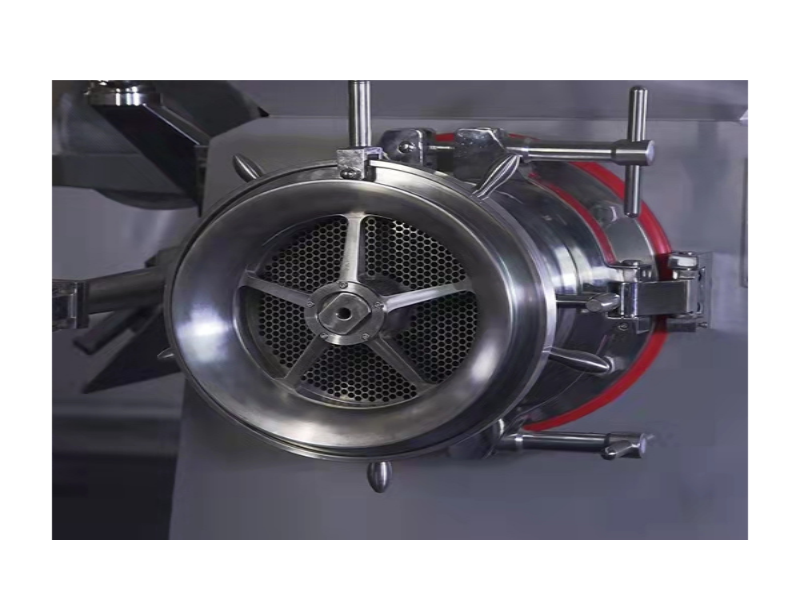
Meat grinders are widely used in large-scale meat processing environments, where the need for efficient and high-quality meat processing is paramount. They are found in meat processing factories, butcher shops, and slaughterhouses, where they help ensure that meat is consistently ground to the desired texture for further processing or packaging.
A key advantage of meat grinders in industrial settings is their ability to handle high volumes of meat while maintaining the required quality. 304 stainless steel, commonly used in the construction of meat grinders, ensures that the equipment is durable, easy to clean, and resistant to rust and corrosion. This makes the machine suitable for frequent, high-volume use in environments where hygiene standards are crucial, such as the food industry.
In addition, the design of meat grinders allows for easy operation and quick disassembly for cleaning. This is particularly important in large-scale processing facilities, where minimizing downtime for maintenance is essential. The grinder’s ability to efficiently process different cuts of meat without compromising the final product’s consistency helps maintain a streamlined production process and improves overall productivity.
A meat mixer grinder is a versatile piece of equipment that combines both grinding and mixing functions into one unit. This integrated design is particularly valuable in high-efficiency production lines, where there is a need to simultaneously grind meat and mix in various ingredients such as spices, seasonings, or marinades. This combination of processes helps save time, reduces the need for additional machinery, and increases overall production efficiency.
In typical industrial settings, such as sausage production or marinated meat preparation, the ability to grind and mix meat in one continuous operation significantly enhances productivity. By using a meat mixer grinder, manufacturers can avoid the extra step of transferring ground meat to a separate mixing machine, streamlining the production workflow. This not only saves time but also reduces labor costs, making it an ideal choice for facilities with high-volume, high-speed production needs.
The precision engineering of meat mixer grinders ensures their ability to handle demanding industrial operations. With low noise and minimal vibration, these machines are designed for extended, heavy-duty use in continuous processing environments. The use of high-quality materials and advanced processing techniques contributes to the durability and reliability of the machines, ensuring that they can operate smoothly even under high loads.
The equipment's low noise and vibration design is particularly beneficial in large production plants, where maintaining a comfortable and safe working environment is important. The precision components used in these machines guarantee consistent and uniform results, ensuring that the meat is ground and mixed with the right texture and consistency for a variety of products.
Meat mixer grinders are particularly well-suited for high-output production lines that require both grinding and mixing in one step. For example, in the production of sausages and marinated meats, this equipment can efficiently handle the complex task of grinding meat and mixing in seasonings, reducing manual labor and the need for multiple machines. This makes the meat mixer grinder ideal for large-scale production environments, where speed and consistency are paramount.
The primary difference between meat grinders and meat mixer grinders lies in their core functionality. A meat grinder is designed to perform a single task: grinding meat into smaller, uniform pieces. This process is essential for creating ground meat products such as sausages, burgers, and minced meat. The meat is processed through a series of augers, blades, and plates, ensuring the desired consistency for further production or packaging.
On the other hand, a meat mixer grinder integrates both grinding and mixing into one machine. This multi-functionality allows the equipment to not only break down the meat but also blend it with various seasonings, spices, or binders in a single operation. This dual-purpose design makes the meat mixer grinder ideal for production lines that require both functions, such as in the production of sausages, marinated meats, or patties. The ability to perform both tasks simultaneously saves time, reduces labor, and simplifies the production process.
When it comes to choosing the right equipment, the meat mixer grinder is more suited for high-output, multi-step production lines. These machines are capable of handling both grinding and mixing tasks, making them particularly useful in industries where the production of flavored or seasoned meat products is required. The integration of two functions into one machine enhances efficiency, as it eliminates the need for a separate mixer, speeding up the process and reducing the equipment footprint on the production floor.
In contrast, the meat grinder is more appropriate for environments focused solely on grinding. While it may not offer the versatility of a mixer grinder, it excels in its single-purpose role, delivering high efficiency for large-scale meat grinding. For businesses that focus on producing large quantities of ground meat without the need for additional ingredients, the meat grinder is a reliable and cost-effective solution.
The meat mixer grinder provides greater flexibility due to its ability to handle a wide range of meat types and ingredients. Whether it's mixing seasonings into ground beef for burgers or blending spices into sausage mixtures, this machine can adapt to different recipes and processing needs. The versatility of the meat mixer grinder makes it an excellent choice for diverse production requirements, especially in high-demand environments.
In contrast, the meat grinder is specialized for one task: grinding meat. It is perfect for operations that require high-volume processing of meat without the need for complex ingredient integration. The meat grinder’s focus on efficiency and speed allows it to process large quantities of meat quickly, which is ideal for operations where the main goal is producing consistent ground meat.
Feature | Meat Grinder | Meat Mixer Grinder |
Function | Single task: grinding meat | Multi-task: grinding and mixing |
Efficiency | High efficiency for grinding large volumes | Increases efficiency by combining tasks |
Flexibility | Focuses on meat only | Handles various meats and ingredients |
Ideal Application | Large-scale ground meat production | High-volume production of mixed products |
The right choice between these two types of machines depends on the specific needs of the production line. If the process requires only grinding, a meat grinder will suffice. However, for more complex production needs, particularly where both grinding and mixing are required, a meat mixer grinder offers a more efficient and flexible solution.
When considering meat grinders and meat mixer grinders, one of the key factors to consider is their maintenance and cleaning requirements. Meat grinders are generally simpler in design and thus easier to clean. The straightforward components and fewer moving parts allow for quick disassembly, making them ideal for high-frequency use where quick turnaround times are essential. In facilities where meat grinding happens constantly, such as butcher shops or smaller-scale production lines, the ease of cleaning is a significant advantage.
On the other hand, meat mixer grinders, with their more complex structure and additional mixing components, require more time and effort to clean. While they integrate both grinding and mixing in one unit, the added complexity means more parts to disassemble and clean after each use. This does not detract from their efficiency in production, as the combined functionality saves time during processing, but it does imply that regular, thorough cleaning is necessary to maintain hygiene and the longevity of the equipment.
The choice of materials plays a crucial role in the maintenance and durability of both meat grinders and meat mixer grinders. 304 stainless steel is the preferred material for both types of equipment due to its corrosion resistance, durability, and ease of cleaning. The use of this material ensures that the equipment can withstand the rigors of industrial use while maintaining hygiene standards. Additionally, precision engineering and heat-treated components further enhance the machine's longevity and reliability, reducing the frequency of breakdowns and minimizing maintenance needs.
Feature | Meat Grinder | Meat Mixer Grinder |
Cleaning Complexity | Simple, easy to clean and maintain | More complex, requires more time for cleaning |
Material | 304 stainless steel for durability | 304 stainless steel for hygiene and longevity |
Maintenance | Low maintenance due to simple design | Requires more maintenance due to complex design |
Both machines benefit from the use of high-quality materials and precise engineering. However, their maintenance needs differ, with meat mixer grinders requiring more attention due to their multi-functional design.
A meat grinder is ideal for high-volume meat grinding where no additional ingredients or spices need to be mixed. It is particularly suited for large-scale operations that focus on producing ground meat products without the need for complex seasoning or blending. Examples include meat processing plants, butcher shops, and facilities that produce ground beef, pork, or poultry.
In these environments, where the primary goal is to efficiently break down large cuts of meat into uniform pieces, the meat grinder excels in delivering high output while maintaining the necessary consistency. For operations that do not require flavoring or mixing in the meat, a meat grinder provides a straightforward solution. Its simple design, ease of use, and low maintenance make it a reliable choice for businesses focusing solely on the grinding process.
In contrast, a meat mixer grinder is the perfect solution for production lines where both grinding and mixing need to occur simultaneously. These machines are especially beneficial for high-volume production of seasoned products, such as sausages, flavored patties, and marinated meat. A meat mixer grinder integrates the grinding process with the mixing of various ingredients, which streamlines the production workflow and reduces labor costs.
These machines are designed for facilities that require consistency in both the ground meat texture and the distribution of spices and other seasonings. By performing both tasks in one step, the meat mixer grinder helps save time and improve efficiency, making it essential for businesses involved in producing complex meat products. The versatility of this equipment also allows it to handle a variety of meats and ingredients, giving manufacturers the flexibility to create diverse product offerings.
Feature | Meat Grinder | Meat Mixer Grinder |
Primary Use | High-volume meat grinding | Grinding and mixing in one process |
Ideal for | Simple, large-scale meat processing | High-output, complex meat product production |
Efficiency | Fast and efficient for grinding | Time-saving by integrating grinding and mixing |
Customization | Limited to meat grinding | Handles various meat types and seasonings |
Choosing the right machine ultimately depends on the complexity of your production line. For straightforward, high-volume meat grinding, a meat grinder is sufficient. However, if your business requires mixing and grinding in one step, a meat mixer grinder offers the efficiency and versatility needed for more specialized meat product production.
In this article, we discussed the key differences between a meat grinder and a meat mixer grinder, highlighting how each machine fits specific production needs. Choosing the right equipment can significantly enhance production efficiency and ensure high-quality, safe meat processing. QI QI HAR SUNBY MACHINERY CO., LTD. offers advanced meat grinders and mixer grinders designed to meet industrial demands, providing reliable performance and durability in high-volume processing environments.
A: A meat grinder focuses solely on grinding meat into smaller pieces, while a meat mixer grinder combines grinding and mixing, making it ideal for producing products like sausages and marinated meat.
A: Choose a meat grinder if your production line only requires grinding meat. For high-volume, multi-step processes that also involve mixing, a meat mixer grinder is more efficient.
A: A meat mixer grinder offers the benefit of completing both grinding and mixing in one step, improving efficiency and reducing production time for complex meat products.


