


Views: 0 Author: Site Editor Publish Time: 2026-08-11 Origin: Site


Transitioning from manual fish processing to automated systems is no longer an optional upgrade. It is a critical necessity for modern food facilities. Scaling meat yield, standardizing product quality, and mitigating rising labor costs demand highly efficient mechanized solutions. However, facility automation is not a universal magic wand. You must realize not all processing equipment handles every aquatic species equally. Investing in the wrong machinery inevitably leads to severe product waste, high bone residue, and unexpected operational bottlenecks. Production managers often struggle to match equipment specifications perfectly with their exact raw materials. Our goal is to clarify the exact capabilities and limitations of commercial meat separators. We will define which specific fish species they handle efficiently and what vital pre-processing steps are strictly required before operation. Finally, you will discover how to evaluate this equipment accurately for your specific production line to ensure maximum meat recovery.
An automatic fish deboner (often utilizing a belt-and-drum separation method) is highly effective for small-to-medium freshwater and marine species, producing minced meat for surimi, patties, and fishballs.
Large or dense-boned fish (e.g., mature tuna, large salmon) cannot be processed whole and require heading, gutting, and filleting prior to mechanical bone separation.
Realistic meat recovery yields range from 60% to 90%, heavily dependent on the species' anatomical structure and the quality of pre-processing.
Evaluating a fish bone removal machine requires aligning the machine's perforation size (drum mesh) with the target species and desired final product texture.
Understanding how an automatic fish deboner works helps you determine its compatibility with your raw materials. The machine does not use blades to cut meat away from the skeleton. Instead, it relies entirely on localized pressure.
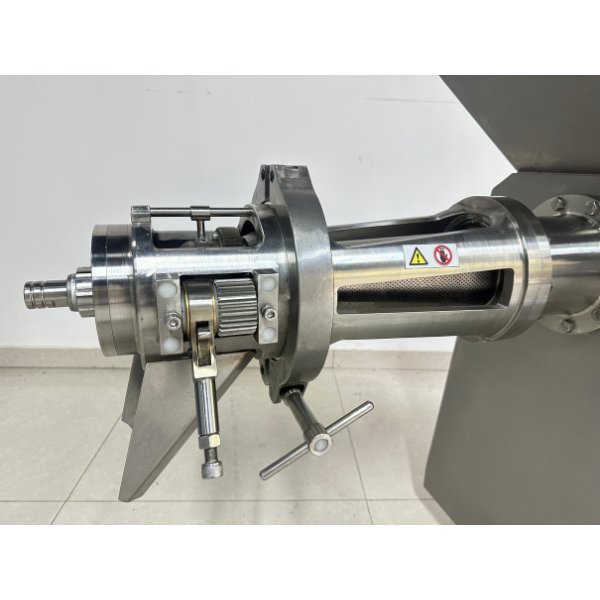
Most commercial models operate on a simple but highly effective belt-and-drum system. The mechanism relies on opposing mechanical forces to achieve separation.
Operators feed raw, pre-processed fish into the receiving hopper.
A thick, continuous rubber belt pulls the fish against a rotating stainless-steel drum.
The drum features thousands of tiny perforations.
The belt applies massive pressure, forcing soft muscle tissue through the tiny holes into the drum interior.
Hard materials like bones, skin, fins, and scales cannot pass through the mesh.
External scrapers clear these hard materials away into a separate waste discharge chute.
You must establish realistic expectations regarding the final product. This machine produces minced fish meat or paste. It does not produce intact, boneless fillets. Many new facility managers mistakenly purchase this equipment expecting pristine fillets. If you need whole fillets, you require an entirely different machine called a pin-bone remover. The minced output from a separator is strictly for secondary processing. You use it to create surimi, fish sausages, meatballs, or burger patties.
This pressure-based design dictates exactly what physical size and skeletal density the machine can process safely. If you feed fish with massive, rigid bones into the hopper, you risk catastrophic equipment failure. Hard bones will puncture the rubber belt. They can also dent or tear the stainless-steel drum. Soft meat flows easily under pressure. Dense skeletal structures do not. Therefore, matching your fish species to the structural limits of the machine is your primary operational objective.
You will achieve optimal results when processing fish that possess soft bone structures and high meat-to-bone ratios. Certain categories of fish naturally pair better with mechanical extrusion methods.
Freshwater aquaculture provides excellent raw materials for mechanical separation. Common examples include Carp, Tilapia, Catfish, and Loach. These fish generally feature relatively soft skeletal systems. They also yield high volumes of usable muscle tissue. You only need basic heading and gutting (H&G) before feeding them into the machine. Processing freshwater species directly reduces manual labor hours drastically while maintaining a consistent mince texture.
The global surimi industry relies heavily on marine and pelagic species. Examples include Pollock, Mackerel, Sardines, Whiting, and Croaker. These fish are the absolute industry standard for mechanical bone separation. They offer incredible meat recovery rates. The machine extracts high-quality white meat with minimal bone fragmentation. Pelagic species flow smoothly through the extrusion drum, allowing your facility to operate at maximum hourly capacity without stressing the motor.
You do not have to process whole fish to extract immense value from this equipment. Many processing plants use the machine strictly to recover meat from offcuts. When manual workers fillet premium fish, they leave significant meat on the skeleton. You can run these leftover skeletons, tails, and belly trimmings through the separator. This specific implementation maximizes total yield. It transforms a waste product into a profitable secondary commodity, substantially reducing your daily waste disposal costs.
Category | Common Examples | Machine Suitability | Required Pre-Processing |
|---|---|---|---|
Freshwater | Carp, Tilapia, Catfish | Excellent | Heading, Gutting, Washing |
Pelagic / Marine | Pollock, Sardines, Whiting | Excellent (Industry Standard) | Heading, Gutting, Washing |
Large Dense-Boned | Mature Tuna, Large Salmon | Poor (Whole) / Good (Frames) | Filleting first; only process frames |
Armored / Hard-Scale | Specific local reef fish | Fair to Poor | Heavy pre-scaling required |
No single piece of equipment handles every situation perfectly. Attempting to process unsuitable species will break your machinery and contaminate your final product. You must recognize these rigid biological limitations.
Species like mature Tuna, Halibut, or large farmed Salmon pose a significant threat to standard separation drums. You cannot feed these whole. Their thick spines and dense ribs will destroy the internal components. For large fish, manual or mechanical filleting must happen first. You remove the premium fillets for direct sale. Only after removing the main meat should you feed the remaining frames and trimmings into the separator.
Common Mistake: Forcing oversized fish into a standard hopper often burns out the drive motor. Always adhere strictly to the manufacturer's maximum intake dimensions.
Standard separation machines effectively scrape away soft skin and normal scales. However, heavily armored fish present a unique challenge. Thick, rigid scales act like abrasive sandpaper against the internal rubber belt. Over time, processing heavily scaled fish accelerates belt wear exponentially. More importantly, extreme pressure can shatter hard scales into microscopic fragments. These fragments slip through the drum perforations, ruining the texture of your minced yield. For these specific species, you must descale them thoroughly before mechanical separation.
You cannot ignore basic sanitary requirements. Virtually all fish must undergo strict heading, gutting, and washing before entering a fish deboning machine. This is non-negotiable for food safety. If you feed whole, ungutted fish into the separator, the machine will crush the internal organs. This process forces viscera, bile, and excess blood directly into the meat paste. Contaminated mince spoils quickly, fails bacterial testing, and tastes incredibly bitter. Always establish a strict pre-washing protocol to ensure optimal product purity.
Facility owners invest in automation to drive profitability. Understanding how to measure performance metrics ensures you maximize your daily production outputs.
Meat recovery rates dictate your operational success. A high-quality machine should achieve anywhere between 60% and 90% meat recovery. This percentage depends heavily on the anatomical structure of the fish. Compare this directly against manual labor. Human workers often leave up to 30% of usable meat on the bone during fast-paced filleting. Mechanization captures that lost revenue. By calculating your raw yield gains per hour, you can easily project how quickly the machine pays for itself.
You must match the machine's capacity to your facility's daily intake. Equipment sizing ranges dramatically based on your production goals.
Entry-Level Commercial: Handles roughly 100 kg to 300 kg per hour. Ideal for small local processors or large restaurant commissaries.
Mid-Range Production: Processes 500 kg to 800 kg per hour. Best for regional distribution centers making specialty fishballs.
Industrial Surimi Lines: Capable of processing 1,500+ kg per hour. These massive units run continuously across multiple shifts.
High yield means nothing if the product is unsafe. Commercial buyers maintain strict tolerances for bone residue in minced paste. When evaluating a fish bone removal machine, you must demand a guaranteed bone residue percentage from the supplier. Micro-bones in the final product can injure consumers and trigger massive product recalls. High-end machines utilize precise drum tensions to keep residue effectively near zero.
Best Practice: Always request documentation proving the equipment meets your local food authority's safety standards for bone fragment size and frequency.
Buying the machine is only the first step. You must integrate it successfully into your daily plant operations. Careful planning prevents severe downtime and hygiene violations.
Fish processing generates significant bacterial risks. Therefore, your machine must feature 304 or 316-grade stainless steel construction. Inferior metals will rust immediately in a wet, salty environment. Emphasize the importance of toolless disassembly. Your sanitation team must strip the machine down quickly for Clean-in-Place (CIP) procedures or daily washdowns. Smooth welds and accessible drum interiors prevent dangerous biofilm formation. This ensures strict HACCP compliance.
Industrial machinery requires ongoing upkeep. Be transparent about your operational requirements. The continuous-pressure rubber belt takes severe abuse. It is a consumable part. It stretches and wears down, requiring scheduled replacement every few months based on usage. Similarly, the perforated drum experiences metal fatigue. Drum sharpening or outright replacement is a long-term reality you must plan for. Neglecting these replacements drops your yield dramatically.
These machines rarely operate in isolation. You cannot just drop one into an empty room. They require careful upstream and downstream integration. Upstream, you need automated washers, scaling drums, and heading machines to feed clean raw material continuously. Downstream, the minced meat usually drops directly into specialized strainers. Strainers remove any rogue microscopic pin bones. From there, the paste flows into forming machines for final shaping. Seamless integration keeps your entire factory floor moving efficiently.
Automating your fish processing line requires careful consideration of both machinery and biology. The fundamental suitability of a machine depends entirely on matching the drum perforation size and motor torque to your specific fish species and pre-processing workflow. Soft-boned freshwater fish and standard pelagic species yield exceptional results. Conversely, dense-boned or hard-scaled fish demand strict pre-processing to protect your equipment and product purity.
Take actionable steps before committing your budget. We advise operational managers to request a physical test run from the manufacturer. If an in-person test is impossible, demand a video-documented trial using your exact fish stock. Verify the output texture and bone residue levels firsthand. Proper preparation ensures you integrate a solution that truly elevates your facility's yield and profitability.
A: No. This is a very common misconception. The machine uses heavy pressure to squeeze soft meat through a perforated drum. This process destroys the muscle structure, producing a minced meat paste. If you require intact, boneless fillets, you must purchase a specialized pin-bone removal machine instead.
A: Yes. While the machine effectively separates skin and bones, gutting is absolutely mandatory for food safety. Crushing viscera into the meat paste ruins the flavor and introduces severe bacterial contamination. Scaling is also highly recommended to protect the internal rubber belt from rapid wear and tear.
A: Fish must be properly thawed or semi-thawed (tempered) before processing. Feeding rock-hard, fully frozen blocks into the hopper will severely damage the extrusion drum and tear the rubber belt. The meat must be pliable enough to squeeze through the mesh holes safely.


