


Views: 0 Author: Site Editor Publish Time: 2026-04-10 Origin: Site


Choosing the right meat grinder can greatly improve your kitchen's efficiency and the quality of your meals. Whether you’re preparing fresh burgers, sausages, or ground meat, the perfect meat grinder makes all the difference. In this article, you’ll learn what factors to consider when choosing the ideal meat grinder for your needs, from capacity to versatility and essential features.
A meat grinder is an essential tool for industrial kitchens and meat processing facilities, offering a wide range of benefits that improve both the quality and efficiency of meat processing. Here's why investing in a high-quality meat grinder is crucial for your operations.
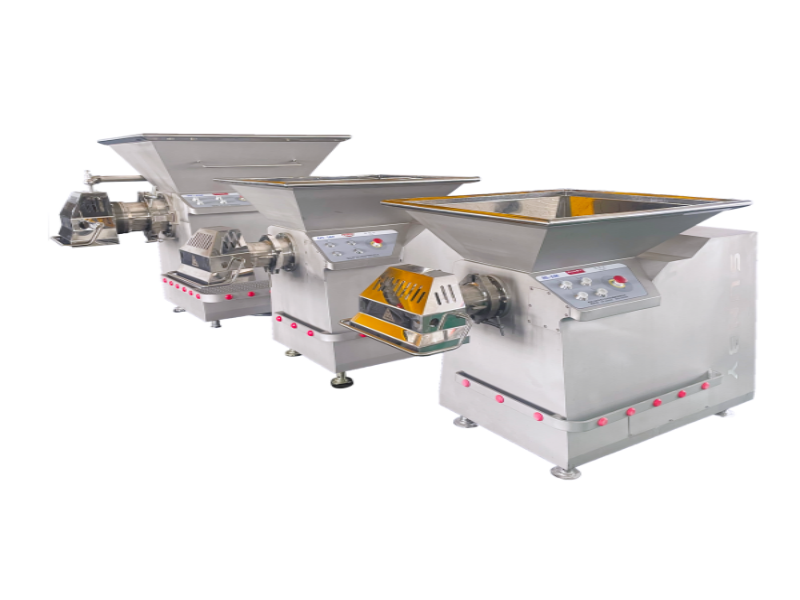
One of the primary reasons to choose a meat grinder is to ensure the freshness of the meat. By grinding meat in-house, you can maintain control over the quality, unlike pre-packaged meat which often contains preservatives or additives. Freshly ground meat retains its original texture, flavor, and nutrients, leading to superior end products.
Grinding your own meat eliminates the risk of preservatives, offering a cleaner and healthier product to your customers. This is particularly important in high-volume settings where product quality is a priority.
When you grind meat yourself, you have complete control over the fat content and texture of the meat. Whether you're creating burgers, sausages, or specialty products, you can adjust the grind to suit your recipes. This level of customization ensures that you can meet the specific preferences of your customers or enhance the flavor profile of your products.
For instance, you can vary the fat ratio in your ground meat, which directly affects its juiciness and tenderness. By tailoring the grind size, you can create a fine, medium, or coarse texture depending on the product you're making.
Modern industrial meat grinders are incredibly versatile. Not only can they grind different types of meat, but they can also process other ingredients like vegetables, cheese, or even fish. This versatility allows meat processors to diversify their product offerings, making it easy to create a variety of meat-based and mixed products, such as sausages, meatballs, and pâtés.
Some industrial grinders come with attachments that allow for even more flexibility, such as sausage stuffing tubes and kibbeh makers, expanding their capabilities beyond basic grinding.
Grinding meat in-house can significantly reduce long-term costs. By buying meat in bulk and processing it yourself, you can save money compared to purchasing pre-ground meat. This is especially beneficial for large-scale operations where the volume of meat processed is substantial.
A high-quality industrial meat grinder provides a faster, more efficient way to process large quantities of meat, increasing production speed and reducing labor costs. Over time, the return on investment in such equipment is substantial, making it a cost-effective choice for any industrial kitchen or meat processing plant.
Selecting the right meat grinder for industrial use is a critical decision that can impact production efficiency and product quality. Here are the key factors to consider when making this important choice.
● Single Screw Meat Grinders Single screw grinders are ideal for small to medium-scale meat processing. They are efficient in handling regular meat grinding tasks and provide consistent results for everyday production needs. These grinders are particularly suitable for facilities that process moderate volumes of meat regularly.
● Double Screw Meat Grinders Double screw grinders are designed for larger, high-capacity meat processing plants. With the ability to handle larger volumes of meat, they ensure continuous and efficient production, making them a perfect fit for high-demand industrial environments. These grinders also offer enhanced grinding speed and improved texture uniformity, critical for large-scale operations.
The motor power and speed settings are essential to consider when choosing a meat grinder. Depending on the type of meat and volume to be processed, the grinder should be equipped with an appropriate motor that can handle the workload efficiently.
● A higher power motor is necessary for tougher cuts of meat or for processing larger quantities, while lower power motors may suffice for lighter, more frequent tasks.
● Adjustable speed settings offer flexibility, allowing you to customize the grinding process for different meat textures, improving product quality. Grinders with multiple speed options ensure optimal performance, whether for coarse or fine grinding.
Capacity and size are significant factors in selecting the right meat grinder. Different operations require different levels of production capability:
● Smaller Operations may benefit from grinders with a capacity that processes between 0.5 to 2 tons per hour, ensuring efficiency without occupying excessive space.
● Larger Production Lines will require grinders with higher capacities, ranging from 3 to 9 tons per hour, to accommodate the increased volume of meat processed. Ensuring that the grinder’s size aligns with the available space in the production area is also crucial for smooth operations.
Factor | Consideration |
Type of Grinder | Single screw for smaller operations, double screw for large-scale production. |
Motor Power | Choose higher power for larger, tougher cuts; lower power for lighter tasks. |
Speed Settings | Multiple speeds enhance flexibility for different meat textures. |
Capacity and Size | Select based on production volume and available space in the facility. |
Choosing the right meat grinder for your production process is a crucial step in optimizing efficiency and ensuring the quality of your output. Here are key factors to consider when matching a meat grinder to your specific needs.
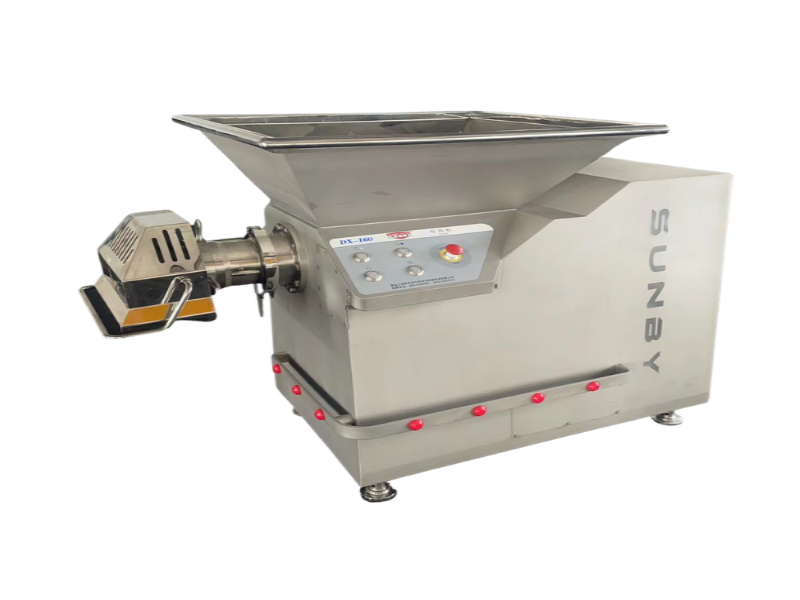
Different meat processing tasks require different grinder features. The type of meat, texture, and final product all influence the grinder's specifications. For example, if your production requires finely ground meat for sausages or pâtés, choosing a grinder with a smaller plate size and precise motor settings is essential.
Conversely, if you handle tougher cuts or a mixture of meat types, a grinder with a more robust motor and higher torque is necessary to ensure smooth and efficient operation. Attachments like sausage tubes or vegetable shredders can further enhance functionality, providing versatility in product offerings. Ensure the grinder you choose has the appropriate features and attachments to meet these demands.
When selecting a grinder, it's important to balance capacity with available kitchen space. Large-scale production may require a grinder capable of processing 5 to 9 tons of meat per hour, while smaller operations may only need a capacity of 1 to 2 tons per hour.
Ensure that the grinder's size fits within your kitchen or production area without hindering workflow or efficiency. Overly large equipment can take up unnecessary space and may reduce the overall functionality of the production line, especially if you lack room for additional machinery or storage.
Setting a realistic budget for your meat grinder is essential. While high-end grinders may have a higher upfront cost, they often provide long-term benefits in terms of durability, efficiency, and versatility. However, it’s important to balance your immediate budget with long-term production needs.
Investing in a slightly more expensive machine with advanced features could offer greater returns by reducing labor costs, improving output quality, and minimizing maintenance needs. Weighing the initial cost against the potential savings over time ensures you make the most informed decision for your production needs.
Factor | Consideration |
Grinder Features | Choose features and attachments based on production requirements for texture and volume. |
Capacity and Space | Ensure grinder fits available space while meeting required production volume. |
Budgeting | Balance cost with long-term benefits, factoring in operational efficiency and durability. |
When selecting an industrial meat grinder, several key features significantly impact its functionality and performance. These features ensure that the grinder meets the high demands of meat processing while maintaining efficiency, durability, and versatility.
The quality of the grinding plates and blades is crucial for achieving precise cuts and maintaining durability. High-quality stainless steel plates and blades are essential, as they ensure the grinder can process different types of meat efficiently without frequent maintenance. Stainless steel provides corrosion resistance, which is particularly important in industrial environments where the grinder is used frequently and exposed to various food materials.
The size of the grinding plate should also be considered based on the required texture of the ground meat. Coarse plates are ideal for products like sausages, while finer plates are used for ground meat like hamburger patties or pâtés. The choice of grinding plate plays a key role in the uniformity and quality of the final product.
Attachments and accessories can significantly enhance the versatility of your meat grinder, enabling it to handle a wider range of tasks. For instance, sausage stuffing tubes allow you to create fresh sausages from ground meat, and vegetable grinders can help you prepare other products such as vegetable-based fillings or garnishes.
Other accessories might include additional blades for different grinding speeds, or specialized plates for producing particular textures of meat. By choosing a grinder with the right attachments, you can expand your production capabilities and optimize the grinder’s use for various meat processing needs.
In any industrial kitchen or meat processing facility, cleanliness is essential for maintaining food safety standards and ensuring the grinder’s longevity. Grinders with easy-to-dismantle parts and smooth surfaces make cleaning far more efficient. Many modern meat grinders are designed with quick disassembly in mind, allowing operators to clean and sanitize the equipment between uses, reducing the risk of cross-contamination.
Additionally, grinders built with materials like stainless steel or with smooth, seamless construction make cleaning even easier, as there are fewer crevices where meat particles or bacteria can accumulate. This reduces downtime for maintenance and improves overall hygiene.
Choosing the right meat grinder depends on your production needs, equipment features, and scale of operation. Regular maintenance and proper usage are crucial to ensure the grinder operates efficiently for a long time. QI QI HAR SUNBY MACHINERY CO., LTD. offers reliable meat grinders that provide excellent durability and functionality, meeting the high demands of industrial kitchens and meat processing facilities.
A: When selecting a meat grinder, consider the production volume, motor power, and the types of meat you’ll process. The grinder’s features should align with your specific production needs for optimal performance.
A: The size and capacity of a meat grinder determine how much meat can be processed at once. Choosing the right size ensures efficiency and matches the scale of your operation.
A: Yes, many modern meat grinders come with attachments that allow them to process vegetables, making them versatile for various kitchen tasks.


