


Views: 0 Author: Site Editor Publish Time: 2026-04-17 Origin: Site


Cleaning your meat grinder regularly is essential for maintaining both food safety and the longevity of the equipment. Over time, meat residues can build up, leading to bacteria growth and a decline in the grinder’s performance. In this article, we’ll explore how to properly clean your QI QI HAR SUNBY MACHINERY CO., LTD. industrial-grade meat grinder, ensuring it stays in top condition for years of reliable use.
Regular cleaning of your aluminum meat grinder is essential to prevent the build-up of harmful bacteria. Residues from raw meat, including fats and proteins, create an environment where bacteria like E. coli and Salmonella can thrive. If these residues are not removed promptly, they can spread throughout the grinder, contaminating the next batch of meat. This cross-contamination not only poses a serious food safety risk but also affects the quality of the meat being processed. A quick, thorough cleaning routine ensures that harmful pathogens are eliminated, contributing to a safer and more hygienic food preparation environment.
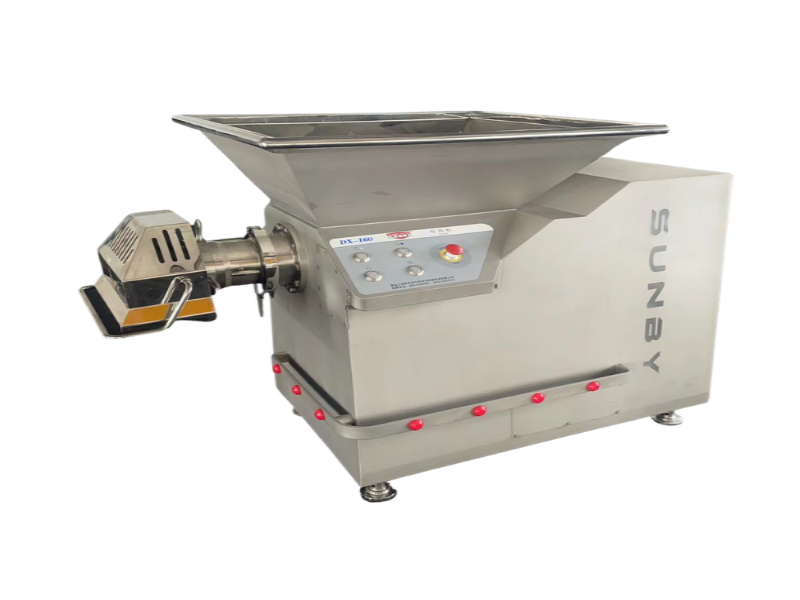
While aluminum is durable, it presents specific challenges for cleaning. Unlike stainless steel, aluminum is more porous and reactive, which makes it more prone to oxidation, especially when exposed to high heat or harsh cleaning agents. If oxidation occurs, it forms a dark, chalky residue on the grinder’s surface. Not only does this affect the appearance of your grinder, but it can also transfer into the meat during processing. To prevent this, it is important to use mild cleaning agents and avoid harsh methods such as dishwashing or abrasive cleaning tools, which could damage the surface.
Cleaning also plays a crucial role in preventing unpleasant odors that can develop from decomposing meat particles. As fats and proteins remain in the grinder, they can turn rancid over time, creating foul smells. Regular cleaning ensures that all parts are free from such residues, thus preventing odors from building up. Additionally, moisture left on the grinder’s metal components after cleaning can lead to rust, especially on aluminum. By thoroughly drying the parts and conditioning them with food-grade mineral oil, you help maintain the QI QI HAR SUNBY MACHINERY CO., LTD. grinder’s performance and longevity, ensuring it remains in optimal condition.
Cleaning your aluminum meat grinder immediately after use is crucial for both maintaining hygiene and preserving the machine's performance. Leftover meat and fats can quickly harden, making them increasingly difficult to remove over time. This not only increases the cleaning time but also allows residue to accumulate, potentially harboring harmful bacteria. Addressing this issue promptly helps prevent the creation of a breeding ground for pathogens, ensuring a cleaner, safer environment for the next use.
One effective method for initial cleanup is the bread method. Feeding a few slices of bread through the grinder helps push out a significant amount of meat remnants. The bread acts as a physical scrubber, clearing both the grinding plate and the auger, making the subsequent disassembly and washing process much easier. This simple step greatly reduces the amount of meat and fat that could otherwise congeal and become difficult to remove.
Failing to clear residual meat immediately can lead to the drying and hardening of proteins and fats inside the grinder. Once these substances have set, cleaning becomes more labor-intensive and may potentially damage delicate parts of the machine. Regular immediate cleanup is a small time investment that provides significant hygiene benefits and helps extend the lifespan of your equipment.
Properly disassembling your industrial meat grinder is crucial to ensure thorough cleaning. Begin by placing the grinder on a stable, flat surface, allowing easy access to all components. The key parts to disassemble include:
1. Hopper/Feeding Tube: Start by removing the hopper, where the meat is placed before processing. This part is typically detachable, allowing for convenient cleaning.
2. Auger (Screw): The auger feeds meat into the grinding mechanism. Depending on the model, it can be removed by loosening the locking ring or collar.
3. Grinding Plate and Blade: Unscrew the locking ring to release the grinding plate and blade. Be cautious when removing the blade, as it is sharp and could cause injury.
4. Grinder Body: Lastly, detach the grinder body from the motor housing, ensuring all parts are separated safely.
By following this organized process, you ensure each component is easily accessible for detailed cleaning, maintaining both the hygiene and functionality of your grinder.
Before beginning the disassembly process, it is essential to ensure that the grinder is fully disconnected from its power source. This eliminates the risk of accidental activation during the cleaning process. Always follow the manufacturer’s guidelines for disassembly, and handle each part carefully to prevent damage or injury.
When cleaning your aluminum meat grinder, it is essential to hand wash all components rather than using a dishwasher. Dishwasher detergents are typically highly alkaline, which, when combined with the high temperatures in a dishwasher, accelerates the oxidation process on aluminum surfaces. This results in the formation of aluminum oxide, which not only alters the appearance of the grinder but can also contaminate the food. By hand washing, you maintain control over the temperature and cleaning agents, helping prevent surface damage and preserving the integrity of the equipment.
For an effective wash, use the following tools and cleaning agents to keep your meat grinder in top condition:
● Warm water: This loosens fatty deposits and meat residues without damaging delicate parts.
● Mild dish soap: Choose a pH-neutral soap, as harsher chemicals can corrode aluminum over time.
● Non-abrasive brushes: A set of nylon or soft-bristle brushes is ideal for scrubbing parts without causing scratches. A bottle brush is particularly useful for cleaning inside the auger and feeding tube, while a small toothbrush works well for intricate areas like the grinding plate holes and auger grooves.
Pay special attention to hard-to-reach areas where residue tends to accumulate, such as:
● Auger (Screw): The auger is the key component that moves meat through the grinder. Use a long, flexible brush to clean inside the spirals and ensure no residual fat or meat particles remain.
● Locking ring threads: These areas are prone to debris accumulation, so it’s important to clean the threads thoroughly with a small brush to prevent residue build-up, which could affect the performance of the locking mechanism.
By focusing on these details and using the proper tools, you ensure that your grinder remains hygienic and continues to operate efficiently.
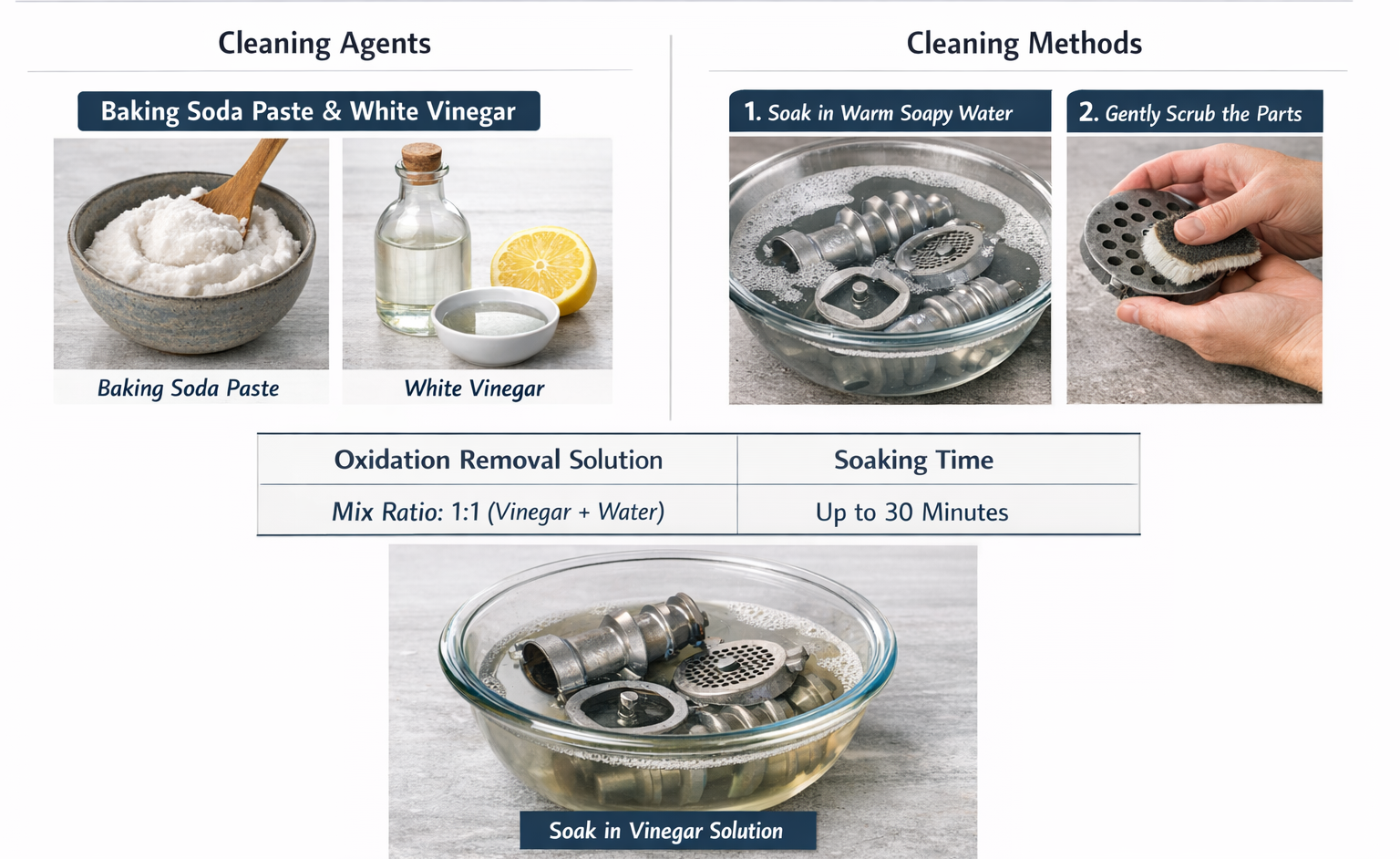
When dealing with stubborn residue or oxidation on your meat grinder, it’s important to choose cleaning agents that are effective yet gentle on aluminum surfaces. A common and safe solution is baking soda paste. To create the paste, mix a small amount of water with baking soda until you form a thick consistency. This mild abrasive helps break down tough food particles without scratching or damaging the metal. For oxidation, a mild acid like white vinegar can be used to restore the aluminum's appearance by dissolving the dark oxide layer.
Start by soaking the affected parts in warm, soapy water for 15–20 minutes. This will loosen any remaining debris, making it easier to remove. After soaking, apply the baking soda paste to areas with persistent food residue and gently scrub with a non-abrasive brush, focusing on intricate spots such as the grinding plate holes or auger spirals.
For oxidation removal, create a mixture of white vinegar and water in a 1:1 ratio. Submerge the parts in the solution and let them soak for up to 30 minutes, depending on the severity of the oxidation. After soaking, use a soft brush to gently scrub the areas with oxidation, ensuring that the surface remains intact. Once cleaned, rinse the parts thoroughly with water and dry them carefully to prevent moisture from causing further oxidation.
Sanitizing your meat grinder is essential for ensuring food safety. While cleaning removes visible debris, it doesn't necessarily eliminate harmful bacteria that could be present in the meat residues. These microorganisms, including Salmonella and E. coli, can remain on the grinder parts if not properly sanitized. If not addressed, these bacteria can contaminate the next batch of meat, posing significant health risks. Sanitization effectively reduces the microbial load, making your grinder safe for the next use.
To sanitize the components, use a mild acid solution such as white vinegar or lemon juice, both of which have natural antibacterial properties. Mix equal parts of vinegar or lemon juice with water to create a disinfecting solution. Soak the grinder parts in this solution for 5-10 minutes to kill any remaining pathogens. Alternatively, you can use a commercial food-safe sanitizer that’s specifically designed for kitchen equipment. Always follow the manufacturer’s instructions on dilution and contact time for optimal results. After sanitizing, rinse the parts thoroughly with water to remove any residual acid or sanitizer, and then proceed with drying.
Thorough drying is a critical step in maintaining your meat grinder. Air drying is the most effective method to ensure all parts are completely moisture-free, preventing rust and bacterial growth. After cleaning and sanitizing, place the parts in a well-ventilated area, allowing them to air dry completely. Avoid using towels that could reintroduce bacteria or leave behind fibers.
Moisture left on the metal components after cleaning can lead to rust and corrosion, especially in sensitive aluminum parts. To expedite the drying process, gently pat the components with a clean, dry microfiber cloth to remove excess water before allowing them to air dry. Ensure all crevices, such as the auger spirals and grinding plate holes, are thoroughly dried. For added protection, store the parts in a dry, cool place to prevent any residual moisture from causing damage.
Applying a thin layer of food-grade mineral oil to the metal components of your meat grinder is essential for preventing oxidation and ensuring smooth operation. The mineral oil acts as a protective barrier against moisture, which can cause rust and corrosion, especially on sensitive parts like the auger and blade. By creating this protective layer, you can significantly extend the lifespan of the equipment, keeping it in optimal working condition for longer.
To condition the metal parts, follow these simple steps:
1. Clean and Dry: Ensure all parts are thoroughly cleaned and completely dry before applying the oil.
2. Apply Mineral Oil: Using a soft cloth or paper towel, apply a small amount of food-grade mineral oil to the surface of the auger, grinding plate, and blade.
3. Distribute Evenly: Gently rub the oil into the metal parts, ensuring even coverage without excess buildup.
4. Wipe Off Excess: After a few minutes, wipe away any excess oil with a clean cloth to prevent it from attracting dust or dirt.
Proper storage is essential to prevent damage to your QI QI HAR SUNBY MACHINERY CO., LTD. meat grinder and ensure it remains in good working condition. Storing the grinder incorrectly can lead to rust, corrosion, or mechanical failure. Moisture can accumulate on the metal parts, leading to oxidation, while dust and debris may interfere with the grinder’s functionality. Additionally, improper storage can cause parts to become misshapen or damaged, reducing the grinder's overall lifespan. Storing the grinder in a suitable environment helps maintain its hygiene and functionality.
To protect your grinder, follow these storage tips:
● Disassemble the Parts: After cleaning and drying, disassemble the grinder into individual parts, such as the auger, grinding plate, and blade. This helps prevent any parts from becoming damaged or collecting moisture.
● Store in a Dry, Cool Place: Place the disassembled parts in a dry, cool area away from direct sunlight or sources of moisture, which can lead to rust or mildew.
● Use Containers or Desiccants: Store the components in sealed containers or use desiccant packs to absorb any remaining moisture and prevent contamination. This ensures that all parts remain dry and free from potential rusting or other damage caused by humidity.
Regularly cleaning and maintaining your aluminum meat grinder is crucial for ensuring food safety and extending the life of the equipment. Proper care helps keep your QI QI HAR SUNBY MACHINERY CO., LTD. industrial-grade meat grinder in top working condition, preserving its efficiency and performance. By following the steps outlined, you can ensure your grinder remains a reliable tool for years to come.
A: You should clean your meat grinder after every use to prevent residue build-up, ensure hygiene, and maintain optimal performance.
A: It is not recommended to use a dishwasher for your meat grinder, as the high temperatures and harsh detergents can damage the aluminum and cause oxidation.
A: Use a mild acid like white vinegar combined with water to clean oxidation from your meat grinder, ensuring you don’t damage the aluminum surface.


