


Views: 0 Author: Site Editor Publish Time: 2026-07-26 Origin: Site


Mechanical deboning forces processors to navigate a strict operational tradeoff. You must constantly balance extraction volume and paste quality. Pushing a chicken MDM machine to maximum pressure increases profit margins temporarily. However, it risks severe bone fragmentation and thermal degradation. Consumers expect consistent texture in formed products like sausages and nuggets. The burden falls on plant managers to configure their processing lines perfectly to meet these expectations without sacrificing yield.
Maximizing profitability in poultry processing requires evaluating equipment carefully. You should base purchasing decisions on a machine's ability to balance the "MDM Triangle". This triangle includes yield percentage, regulatory calcium limits for compliance, and friction-induced temperature rise for protein functionality. A slight pressure adjustment changes everything on the production floor. It impacts moisture retention, emulsion stability, and legal compliance.
In this guide, we explore how to optimize your mechanical deboning process safely. You will learn the mechanics behind pressure management and temperature control. We also compare common separator architectures to help you make informed operational choices.
Chasing a "high-yield chicken MDM machine" without precise pressure controls often results in calcium levels exceeding the standard 0.1% to 0.25% regulatory thresholds.
Friction causes temperature spikes; maintaining a rise of less than 2°C–4°C is critical to preserving meat emulsion capabilities and preventing bacterial growth.
Choosing between auger/screw separators and belt-and-drum systems dictates your baseline output, maintenance schedule, and final paste application (e.g., hot dogs vs. premium nuggets).
Processing plants face a constant battle. Industry veterans call it the "Impossible Triangle" of mechanical deboning. You want high yield. You need low calcium. You require cold temperatures. Achieving all three simultaneously challenges even the best operators. Let us break down these competing business forces.
Yield: You must extract the maximum amount of meat from carcasses. Processing frames efficiently ensures profitability. Every gram left on the bone represents lost revenue.
Calcium: High extraction pressure crushes bone structures. This aggressive action increases the bone particle count in your paste. High calcium risks regulatory downgrades. Downgraded meat often gets routed to pet food production, severely cutting your profit margins.
Temperature: Pushing meat through narrow screens requires immense force. High pressure equates to high friction. Friction generates heat. This heat denatures proteins and reduces the meat's water-holding capacity (WHC).
A successful deployment avoids maximizing one metric blindly. You cannot chase yield while ignoring paste quality. Instead, success means achieving predictable compliance. You hit target profit margins consistently. Your product meets legal standards every single shift without fail.
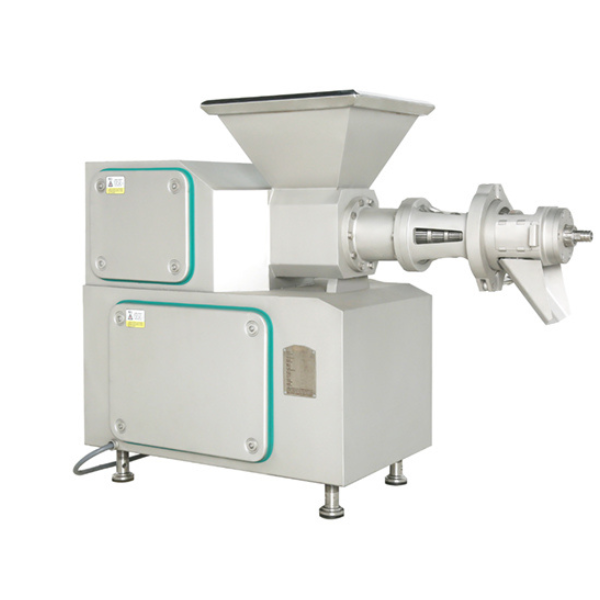
Yield claims from equipment manufacturers often look impressive on paper. However, assessing these claims requires deep technical scrutiny. A true high-yield chicken MDM machine balances extraction rate and paste texture perfectly. You must evaluate this delicate balance during your purchasing process to ensure viable long-term production.
Screen aperture size dictates your baseline paste quality. Processors typically use filters ranging from 0.5mm to 1.3mm. A smaller aperture blocks larger bone fragments effectively. It creates a smooth, fine paste suitable for hot dogs. Yet, restricting flow increases internal pressure. Higher pressure forces more microscopic bone dust through the filter. It also generates excessive heat.
Conversely, a larger aperture reduces internal pressure. The meat flows easily across the steel. Operating temperatures stay low. However, larger screens let larger bone particles slip into the final product. You must choose a screen size matching your specific end-product requirements.
Screen Aperture Size | Internal Pressure Level | Calcium Risk Profile | Ideal End-Product Application |
|---|---|---|---|
0.5mm - 0.7mm | High | High (Micro-dust accumulation) | Fine Emulsion Sausages |
0.8mm - 1.0mm | Medium | Moderate | Standard Chicken Nuggets |
1.1mm - 1.3mm | Low | Low (Larger particles present) | Pet Food Base |
Keeping calcium content within strict legal limits remains mandatory for human consumption. Many markets restrict calcium to under 0.1%. Some regulators measure it as under 150mg per 100g of meat. You optimize frame processing by adjusting pressure valves carefully. Too much squeeze pulverizes the frame entirely. The marrow and bone dust blend irreversibly into the meat.
Always maintain a skeptical mindset toward vendor claims. Some promise maximum yield alongside zero bone particulate. This combination defies basic physics. Yield directly correlates to pressure. Excessive pressure guarantees bone degradation if poorly calibrated. You must demand empirical proof before believing aggressive performance guarantees.
Thermal rise during separation poses a massive threat to meat quality. Friction damages meat on a chemical level. Investing in a low-temperature poultry MDM machine protects your bottom line. It preserves the vital functional properties needed for premium downstream processing.
Temperature spikes damage myosin. Myosin is the vital protein responsible for binding fat and water together in an emulsion. Anything exceeding a 4°C rise from input to output degrades this protein. Denatured proteins ruin the paste's emulsification properties completely. When you mix damaged paste into sausage batter, the emulsion fails during thermal processing. The fat renders out during cooking. You end up creating a dry, greasy, and undesirable finished product.
Manufacturers use specific internal geometries to mitigate friction. Better designs keep the meat cold throughout the separation phase. Consider these critical engineering features when evaluating equipment:
Optimized screw pitch: Gently moves raw material forward without unnecessary churning or aggressive shear forces.
Slower RPMs: Reduces the mechanical force applied against the raw meat and bones.
Cooling jackets: Circulates chilled glycol around the separation chamber to absorb excess heat instantly.
Minimizing temperature rise directly impacts shelf-life. Warm meat accelerates lipid oxidation. Rapid oxidation causes rancid flavors to develop faster. Heat also encourages dangerous microbial load growth. Keeping the paste cold slows bacterial replication. It ensures your product remains safe, stable, and compliant during transit to secondary processing facilities.
Processors generally choose between two primary industry standards. Each architecture offers distinct advantages and operational quirks. Match the architecture directly to your intended end-product.
These systems push raw frames through a perforated cylinder using a heavy-duty rotating auger. They represent the most common separation method globally.
Pros: They deliver incredibly high throughput. They support continuous feed operations easily. They prove highly effective when maximizing overall extraction volume on a fast-paced line.
Cons: They generate significantly more friction. This friction heats the meat rapidly. They require careful pressure tuning daily. Poor tuning leads to massive calcium spikes and ruined paste.
These systems press raw material between a flexible tension belt and a perforated steel drum. Processors often call this a "Baader-style" separation.
Pros: They provide a much gentler separation process. The temperature rise remains incredibly low. They excel at producing 3mm structured meat. This desinewed meat retains muscle fiber integrity better than emulsified paste.
Cons: They generally offer a lower overall yield. They struggle with hard, dense bone structures. Consumable replacement intervals occur more frequently because belts stretch or snap under pressure.
What happens post-purchase matters more than the installation day. Daily operations reveal the true reliability of your equipment. Abrasive raw materials degrade internal components constantly.
Processing bones destroys metal over time. Bones act like sandpaper against stainless steel. Screens warp under immense pressure. Auger flights lose their sharp edges. Pressure valves degrade from constant friction. You must replace these parts regularly to maintain quality. Running an operation on worn augers forces operators to increase pressure artificially. Increased pressure brings back the severe heat and calcium problems you worked hard to avoid.
Time spent cleaning is time lost producing. Evaluate equipment based on teardown complexity. Some machines feature too many small, intricate parts. Dead zones inside the chamber harbor dangerous bacteria like Salmonella or Listeria. A well-designed machine allows rapid access. Fast daily sanitation saves thousands of labor hours annually. It also prevents catastrophic product recalls.
Relying on manual valve adjustments creates dangerous inconsistency. An experienced operator might tune the machine perfectly by listening to the motor. A new hire might crush the bones into dust inadvertently. Avoid operator dependency whenever possible. Look for automated, PLC-controlled pressure regulation systems. Automation ensures the squeeze remains consistent across every single shift, regardless of who runs the line.
Choosing the right equipment requires a practical framework. Never base your decision entirely on glossy brochures. Marketing materials highlight best-case scenarios under perfect conditions. You need real-world data to make a sound investment.
Ship your specific frames and carcasses to the vendor. Let them run your exact raw material through their test facility. Yields vary wildly based on input type. Processing whole, meaty frames yields entirely differently than processing isolated, stripped necks. Establishing baseline yields on your own material provides accurate financial projections.
Take the paste generated during the test run to an independent laboratory. Do not rely solely on the vendor's internal tests. Demand comprehensive lab validation. You need exact figures for moisture retention, protein content, and fat percentages. Most importantly, verify the ash content through incineration testing. Ash indicates exact calcium levels. It proves conclusively whether the machine kept bone particulate within legal limits.
A separator behaves differently at various speeds. Assess whether the machine maintains its temperature and yield ratio at 80% capacity. Then compare those metrics to a 100% maximum rated throughput run. Many machines perform beautifully at lower speeds. However, they overheat the meat severely when pushed to their maximum limit. Your chosen equipment must remain stable under full, unyielding production stress.
Finding the optimal balance in mechanical deboning defines your plant's profitability. The best extraction system aligns perfectly with your specific end-product requirements. Some processors prioritize raw extraction volume to supply budget commodities. Others demand delicate, low-temperature handling for premium emulsions and structured meat. There is no universal perfect choice.
Focus on maintaining the delicate operational balance between yield percentage, strict calcium limits, and temperature control. Encourage rigorous specification validation during the buying process. Prioritize independent yield calculations and lab testing over simple upfront capital cost comparisons. Test thoroughly, maintain equipment diligently, and your processing lines will produce consistent, compliant, and highly profitable meat paste.
A: Ideally, keep the temperature rise below 2°C–3°C. This minimal increase preserves the protein binding capability. It also helps prevent premature lipid oxidation and bacterial growth in the meat paste. Anything exceeding 4°C severely damages myosin, ruining the emulsion.
A: Smaller apertures reduce large bone fragments effectively but restrict flow. This restriction requires higher extraction pressure, which generates microscopic bone dust and excessive heat. Larger screens reduce internal pressure but risk letting larger bone particles slip into the final meat.
A: A typical machine achieves between 60% and 80%. This range heavily depends on your input material. Whole frames yield differently than isolated necks or backs. Strict regulatory calcium limits also dictate how hard you can safely push the extraction pressure.


